Business analysts are increasingly vital to organizations across diverse industries. They bridge the gap between business needs and technical solutions, ensuring projects are aligned with strategic goals. Effective communication and documentation are paramount to this role, and that's where Business Analyst Documents Templates come in. These templates provide a structured framework for creating clear, concise, and comprehensive reports, presentations, and other essential documents. Choosing the right template can significantly streamline workflows, improve collaboration, and ultimately contribute to the success of any project. Business Analyst Documents Templates are more than just pre-designed layouts; they're tools designed to foster consistency and efficiency. They offer a foundation upon which analysts can build tailored documents, ensuring all stakeholders have access to the same information. This article will explore the diverse range of templates available, highlighting their benefits and how to effectively utilize them.
Understanding the Need for Business Analyst Documents Templates
The modern business landscape demands agility and adaptability. Organizations are constantly evolving, facing new challenges and opportunities. Business analysts play a critical role in navigating this complexity, translating business requirements into actionable plans. Without robust documentation, projects can easily derail, leading to misunderstandings, rework, and ultimately, cost overruns. The consistent use of templates ensures that all stakeholders receive the same information, reducing ambiguity and fostering a shared understanding. Furthermore, well-structured documents demonstrate professionalism and a commitment to clear communication – crucial for building trust and maintaining strong relationships with clients and internal teams. The initial investment in creating and utilizing these templates pays dividends in terms of improved project outcomes and increased efficiency.
Template 1: Project Status Reports
A cornerstone of business analyst work is the project status report. This template provides a structured overview of project progress, highlighting key milestones, risks, and upcoming tasks. It's a vital tool for keeping stakeholders informed and managing expectations. The template typically includes sections for:
- Executive Summary: A brief overview of the project's current status.
- Progress Summary: Details on completed tasks, milestones achieved, and any delays encountered.
- Budget & Resources: An update on project costs and resource allocation.
- Risks & Issues: Identification of potential roadblocks and their mitigation strategies.
- Next Steps: A clear outline of planned activities for the next reporting period.
This template is readily adaptable to various project methodologies, such as Agile and Waterfall. It's a foundational document that should be reviewed and updated regularly. Business Analyst Documents Templates for project status reports often include visual aids like Gantt charts to illustrate timelines.
Template 2: Requirements Document
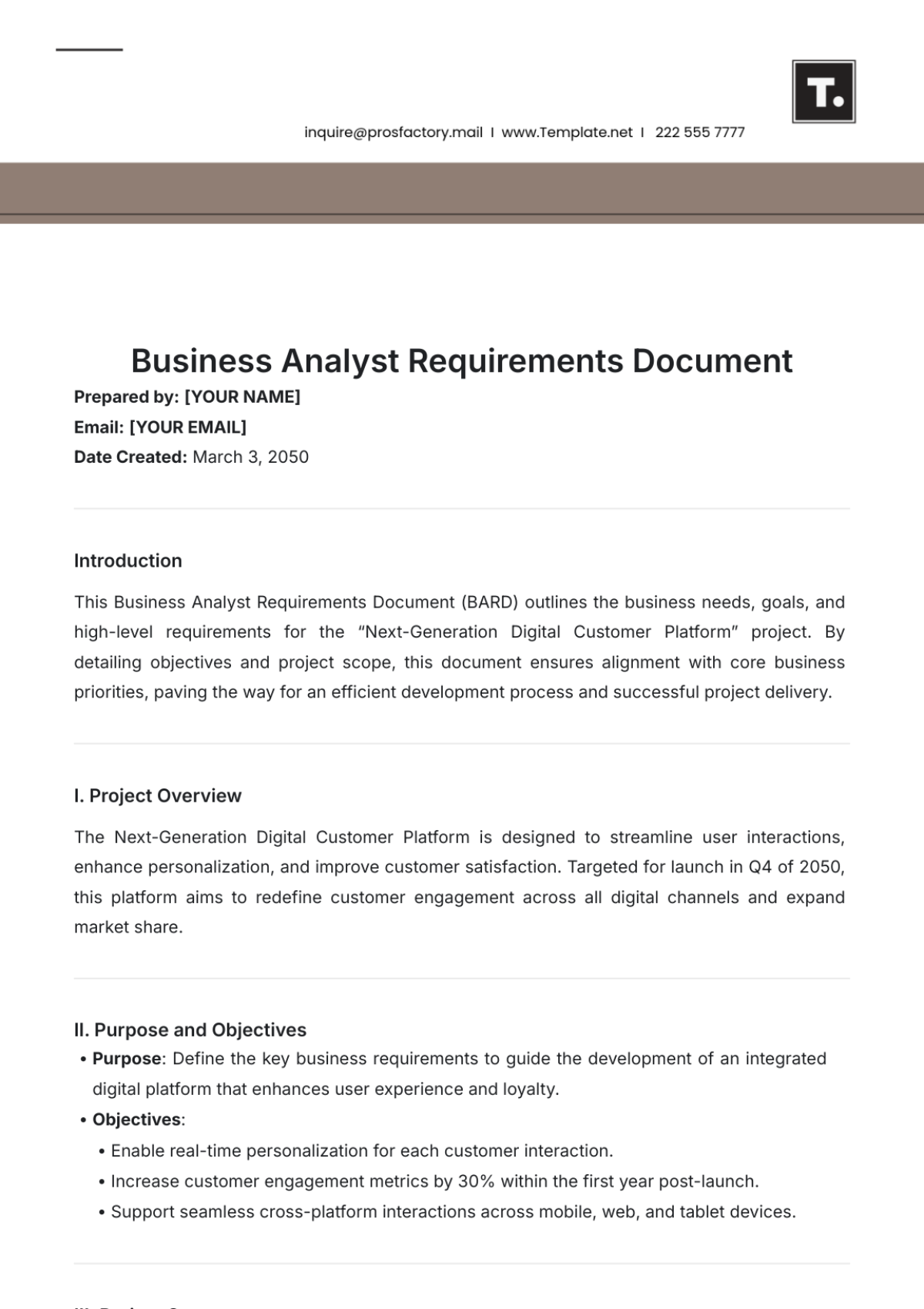
The requirements document is the heart of any project. It meticulously outlines the functional and non-functional needs of the system or product being developed. A well-structured requirements document is essential for preventing scope creep and ensuring that the final product meets the needs of the business. Here's a typical structure:
- Introduction: A brief overview of the project and its purpose.
- Business Goals: Clearly defined objectives that the project aims to achieve.
- Functional Requirements: Detailed descriptions of what the system must do.
- Non-Functional Requirements: Specifications for performance, security, usability, and other quality attributes.
- Use Cases: Illustrative scenarios of how users will interact with the system.
- Data Requirements: Details about the data that the system will handle.
Utilizing a standardized template ensures consistency and facilitates a collaborative review process. Many tools offer pre-built requirements templates that can be customized to fit specific project needs. Business Analyst Documents Templates that support requirements gathering often include sections for stakeholder interviews and user surveys.

Template 3: Test Case Documentation
Testing is a critical component of ensuring the quality of a software product. Test case documentation provides a detailed record of the testing procedures, expected results, and actual outcomes. This template is essential for efficient and effective testing. Key elements include:

- Test Case ID: A unique identifier for each test case.
- Test Case Name: A descriptive name for the test case.
- Test Objective: The specific goal of the test case.
- Test Steps: A detailed sequence of actions to be performed.
- Expected Result: The anticipated outcome of each step.
- Actual Result: The observed outcome of each step.
- Pass/Fail Status: Indication of whether the test case passed or failed.
Templates specifically designed for test case management streamline the process and improve test coverage. These templates often include checklists and traceability matrices to ensure that all test cases are adequately tested. Business Analyst Documents Templates incorporating test case management features are invaluable for ensuring a robust testing strategy.

Template 4: Stakeholder Communication Plan
Effective communication is vital for managing expectations and ensuring alignment among stakeholders. A stakeholder communication plan outlines how information will be shared with different groups of stakeholders. This template helps to proactively address potential concerns and maintain transparency. Sections typically include:
- Stakeholder Identification: A list of all stakeholders involved in the project.
- Communication Methods: The methods that will be used to communicate with each stakeholder (e.g., email, meetings, reports).
- Frequency of Communication: How often each stakeholder will be updated.
- Content of Communication: The type of information that will be included in each communication.
- Responsible Party: The individual or team responsible for delivering each communication.
Using a structured template ensures that communication is consistent and tailored to the specific needs of each stakeholder group. Business Analyst Documents Templates that support stakeholder communication include sections for managing expectations and addressing potential concerns.
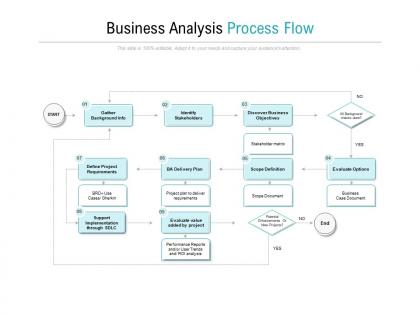
Template 5: Process Flow Diagram
Process flow diagrams are powerful tools for visualizing and documenting business processes. They help to identify bottlenecks, improve efficiency, and ensure that processes are well-understood. A basic process flow diagram typically includes:
- Start/End Points: Clearly defined starting and ending points of the process.
- Activities: Sequential steps within the process.
- Decision Points: Points where decisions are made.
- Data Flows: The movement of data through the process.
Templates for process flow diagrams offer pre-defined shapes and connectors, simplifying the creation of these diagrams. These templates are particularly useful for documenting complex business processes. Business Analyst Documents Templates that support process mapping are essential for documenting and improving existing workflows.
The Importance of Template Selection
Choosing the right Business Analyst Documents Template is crucial for project success. Different templates are suited for different types of documents and projects. Consider the following factors when selecting a template:
- Project Methodology: Agile, Waterfall, or hybrid methodologies may require different templates.
- Document Type: Reports, presentations, requirements documents, or test case documentation will require different templates.
- Stakeholder Needs: Tailor the template to meet the specific needs of your stakeholders.
- Available Tools: Some templates are designed to be integrated with specific software tools.
Conclusion: Leveraging Templates for Enhanced Efficiency
Business Analyst Documents Templates represent a significant investment in streamlining workflows and improving project outcomes. By providing a consistent framework for creating essential documents, these templates reduce the time and effort required to produce high-quality information. The benefits extend beyond simply saving time; they foster collaboration, improve communication, and ultimately contribute to the success of any business initiative. Investing in the right templates is a strategic move that can dramatically enhance the capabilities of business analysts and improve the overall efficiency of the organization. As technology continues to evolve, the demand for effective documentation will only increase, making the utilization of Business Analyst Documents Templates an increasingly vital skill for any business professional. Ultimately, embracing these templates empowers analysts to deliver more impactful and valuable insights.
0 Response to "Business Analyst Documents Templates"
Post a Comment